Introduction
An initial public offering (IPO) in India is the regulated process through which a private company offers shares to public investors and lists on a recognised stock exchange. Most promoters see it as a fundraising event. Operationally, it turns your company into a publicly accountable one.
This guide is for promoters, founders, boards and finance leaders weighing a Main Board or SME IPO. Many struggle with disclosure quality, governance gaps and compliance timing long before they file, and those issues decide how smoothly the process runs.
SEBI's annual report records 366 IPOs raising ₹1,88,616 crore in FY2025-26. This guide covers the stages, the promoter decisions that matter, and the risks that derail filings.
Key Takeaways
- An IPO runs from readiness review to listing and continuing disclosure.
- Fix financial, legal, cap table and related-party issues before filing.
- The merchant banker coordinates, but promoters answer for disclosure accuracy.
- Main Board and SME routes differ; verify current rules before choosing.
What Is the IPO Process in India, and Why Do Promoters Use It?
An IPO is a company's first public issue of shares, followed by listing. It can be a fresh issue (money goes to the company), an offer for sale (OFS, where existing shareholders sell), or a mix.
How an IPO differs from other routes
- Private funding: negotiated privately, with no public disclosure regime.
- Follow-on public offer: a later public issue by an already-listed company.
- Rights issue: shares offered to existing holders.
- Direct sale of shares: a transfer between parties, with no new public issue.
Why promoters list
- Fund expansion or acquisitions
- Strengthen the balance sheet
- Gain a public valuation reference and visibility
- Give eligible shareholders a structured exit
Be honest about the liquidity motive. In FY2025-26, 19 OFS-only IPOs raised ₹50,849 crore for selling shareholders, not for the issuers.
What changes after listing
Listing brings ongoing public accountability:
- Quarterly results on the Main Board
- Material-event disclosures and shareholding patterns
- Related-party scrutiny and constant investor questions
- Public judgment on performance, guidance and capital allocation
Promoters who treat the IPO as a one-time transaction hit predictable problems:
- Late financial adjustments
- Inconsistent disclosures
- Weak internal controls
- Vague use of proceeds
- No investor-relations plan
How the IPO Process Works in India: Step-by-Step
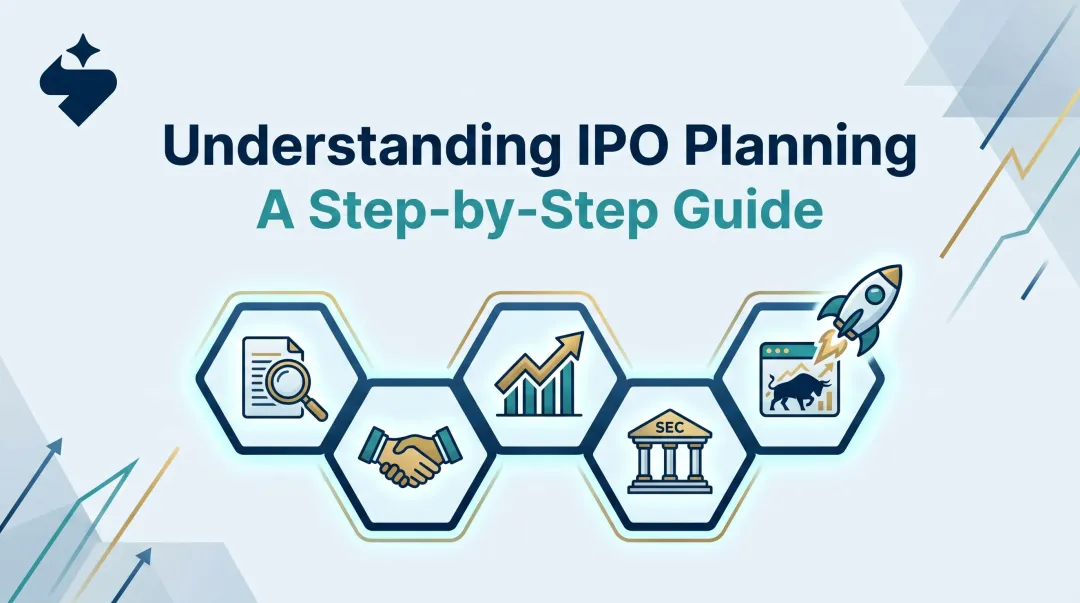
The steps form one connected sequence: readiness, transaction team, diligence and drafting, regulatory review, book-building, allotment, listing and post-listing compliance. Steps overlap and vary by route and issuer.

Step 1: Decide whether the company is IPO-ready
Review these areas before you commit:
- Business stability and audit history
- Internal controls and group structure
- Promoter disclosures and material contracts
- Litigation, related-party transactions and tax matters
- Contingent liabilities, the cap table and management bandwidth
Main Board eligibility under ICDR Regulation 6(1) includes:
- Net tangible assets of at least ₹3 crore in each of the preceding three full years
- Average operating profit of at least ₹15 crore over three years
- Net worth of at least ₹1 crore in each of those years
SME platforms have their own tests. NSE Emerge and BSE SME both cap post-issue paid-up capital at ₹25 crore, and each adds exchange-specific profit and net-worth conditions. That ceiling is on paid-up capital, not on issue proceeds. Check current exchange criteria before relying on any threshold.
Step 2: Appoint the merchant banker and advisors
Appoint a core transaction team:
- SEBI-registered lead manager (BRLM)
- Legal counsel
- Auditors
- Registrar
- Company secretary
Depositories (NSDL, CDSL) credit shares electronically but do not set price.
Under the December 2025 amendments, Category II merchant bankers cannot handle public equity issues for Main Board listing. Confirm your banker's category.
When choosing, weigh:
- Experience in your sector and route
- Distribution capability
- Execution discipline
- Post-listing support
Lead managers file the draft and give the due-diligence certificate, but the issuer keeps primary responsibility for disclosures.
Step 3: Conduct due diligence and prepare offer documents
Build a controlled data room and draft from evidence. The DRHP covers:
- Business, risks and financials
- Management and ownership
- Objects of the issue and material agreements
- Litigation and related parties
Core diligence cannot be outsourced. Every number in the draft should trace to a source document.
Step 4: File, respond to observations, prepare for the issue
The lead manager files with SEBI and the exchanges. The draft goes public for a 21-day comment period. SEBI's observation clock is 30 days from the latest trigger, such as satisfactory responses or exchange in-principle approval. It is not a filing-to-clearance promise.
Observations stay valid for 12 months on the ordinary route, or 18 months under confidential pre-filing. After observations, you prepare the RHP.
SEBI review is not an endorsement of the company's investment merits.
Step 5: Marketing, book-building, pricing and allocation
Roadshows and communication follow ICDR Schedule IX publicity rules, so confirm what is permitted with counsel.
Book-building parameters are fixed in the ICDR framework:
- The price band is announced at least two working days before opening
- The cap must be 105% to 120% of the floor price
- Under Regulation 6(1), the net offer is at most 50% QIB, at least 15% NII and at least 35% retail
- Anchors can take up to 60% of the QIB portion

Balance fundraising goals against valuation discipline. PRIME's data shows the risk: Main Board IPOs averaged an 8% listing gain in FY2025-26, yet an average return of -7% by March 27, 2026, with only 37 of 108 above issue price.
Step 6: Issue, allotment, listing and transition
Applications use ASBA, and eligible individual applications up to ₹5 lakh use UPI. Timelines follow T+3 from issue close:
- T+1: basis of allotment
- T+2: unblocking and demat credit
- T+3: trading begins

Main Board promoters normally contribute at least 20% of post-issue capital, locked in for 18 months (three years if most fresh proceeds fund capex). A green shoe can allow over-allotment up to 15%, but it does not guarantee a price floor. Verify SME lock-ins separately.
Where the IPO Process Applies, and What Promoters Control
Main Board versus SME
| Topic | Main Board | SME |
|---|---|---|
| Admission basis | ICDR Regulation 6 plus exchange criteria | ICDR Chapter IX plus NSE Emerge or BSE SME criteria |
| Applications | Retail, NII, QIB | Individual investor minimum of two lots above ₹2 lakh |
| Reporting | Quarterly | Half-yearly |
| Liquidity support | None mandated | Market-making for at least three years |
| OFS limits | Per ICDR | OFS up to 20% of issue; each seller up to 50% of holding |

Neither route is automatically better. SME is not Main Board with a smaller target; it has its own admission, lock-in and market-making rules. Migration to the Main Board is a separate admission, not automatic.
What promoters must own
- The IPO objective and the fresh versus OFS mix
- Acceptable dilution and use of proceeds
- Timing and governance upgrades
- Management succession and disclosure controls
- Running the business while leaders manage the deal
Who does what
- Company and promoters: supply and validate information
- Lead manager: coordinates diligence and filings
- Auditors and counsel: review financials and legal issues
- Registrar: handles allotment and refunds
- Exchanges and depositories: manage listing and credit
Advisors coordinate execution but cannot replace promoter accountability.
Promoter readiness checklist
- Restated, audit-ready financials and a fast monthly close
- Clean cap table and shareholder agreements
- Related-party transactions documented and justified
- Licence register, material contracts and litigation list
- Organised data room with named owners
- A tested process for answering regulator queries

After listing
Listing day is not the finish. Keep disclosure discipline, report periodically, manage expectations and show progress against the stated objects of the issue. Proceeds utilisation and deviations are reported under LODR Regulation 32.
Common Issues, Misconceptions, and When an IPO May Not Be Appropriate
Common execution issues
- Starting readiness work too late in the growth cycle
- Documents scattered across email threads instead of a single data room
- Inconsistent financial and operational numbers
- Unresolved promoter or related-party matters
- Unsupported projections and thin risk-factor disclosure
- Premature publicity ahead of permitted communication windows
- No post-listing investor relations plan
Misconceptions to avoid
- Eligibility does not guarantee a successful listing.
- SEBI observations are not an investment recommendation.
- Oversubscription does not prove business quality.
- A listing gain is not durable value.
- An IPO is not simply a promoter exit.
When another route fits better
Consider private capital, strategic investment, venture or private equity funding, or debt if:
- Reporting systems are not yet mature
- The business model is unstable
- You need limited capital
- You cannot sustain public-company obligations
Evaluate alternatives with qualified professionals.
Conclusion
An IPO in India combines readiness, rigorous disclosure, regulatory coordination, disciplined pricing and long-term public-company execution. Filing the offer document is only one part of that journey.
S45 is an AI-native investment bank that supports promoters through readiness, Main Board and SME IPO execution, pricing and book-building, listing, and post-listing investor relations. It works with Narnolia, a Category-I SEBI-registered merchant banker, as lead manager.
Approval, valuation, subscription and listing performance are never guaranteed. If you are 6 to 24 months from listing, start with an IPO Readiness Scan.
Frequently Asked Questions
What are the steps in the IPO process?
Readiness review, advisor appointment, due diligence, DRHP filing, SEBI and exchange review, RHP, marketing and book-building, pricing, allotment, listing and post-listing compliance.
How long does it take for an IPO to list in India?
It varies with readiness, route, SEBI observations, documentation and market conditions. SEBI's FY2025-26 median processing time was 25 working days excluding clarification time, or 84 including it. After issue closure, listing follows on T+3.
When can a company go for an IPO in India?
When it meets the SEBI and exchange eligibility, financial, governance and compliance requirements for its chosen Main Board or SME route.
How is IPO allotment done in India?
It follows the issue structure, investor category, subscription and regulatory rules. Eligible retail and NII investors get at least the minimum lot where available, with the remainder allotted proportionally.
Who profits from an IPO?
The company receives fresh-issue proceeds, selling shareholders receive OFS proceeds, and intermediaries earn permitted fees. Investor returns depend on market performance, and no one is guaranteed a profit.
What is an initial public offering (IPO)?
It is a company's first public issue of shares, moving it from private ownership to a public listing. The company then takes on ongoing disclosure and governance duties.