Introduction
Receiving a SEBI observation letter is a major stage in an Indian IPO journey. It is not final approval, and it does not guarantee that the issue will launch.
Founders and CFOs often misread the letter as a green light. It is closer to a to-do list from the regulator, and the work that follows decides whether the IPO reaches the market.
This guide covers what the letter is, how SEBI reviews a DRHP, what issuers must do next, how validity and filing routes affect timing, and what investors should read in the updated offer documents.
Key Takeaways
- The letter records SEBI's observations on the DRHP, not an endorsement of the company or its valuation.
- Issuers must incorporate the observations before filing with the Registrar of Companies.
- Validity depends on the filing route: 12 months (standard) or 18 months (confidential).
- Investors should analyse the RHP and final offer documents, not the letter alone.
What Is a SEBI Observation Letter on a DRHP?
The Draft Red Herring Prospectus (DRHP) is the issuer's preliminary IPO offer document. A SEBI-registered lead manager, appointed under Regulation 23(1) of the ICDR Regulations, coordinates due diligence, filing and regulatory responses. The lead manager also files a Form A due diligence certificate with the draft.
After that filing, SEBI reviews the draft and issues an observation letter under Regulation 25(4). The letter sets out written observations or required changes, which can include clarifications, disclosure requirements or conditions.
Four Documents, Four Stages
- DRHP: the initial draft filed for regulatory and exchange review, without final price details.
- Observation letter: SEBI's comments on the filed draft. Not a valuation opinion or recommendation.
- RHP: the book-built offer document filed before the issue opens, without complete particulars of price or number of securities.
- Prospectus: the final document with complete price and quantity particulars.
The wording of the letter matters. A company may still need to revise disclosures, give undertakings or complete exchange formalities before it proceeds.
For example, SEBI's processing status shows that Arohan Financial Services filed its draft on May 18, 2026, and received observations on November 13, 2026.
How SEBI Reviews a DRHP Before Issuing Observations
Filing and Public Comments
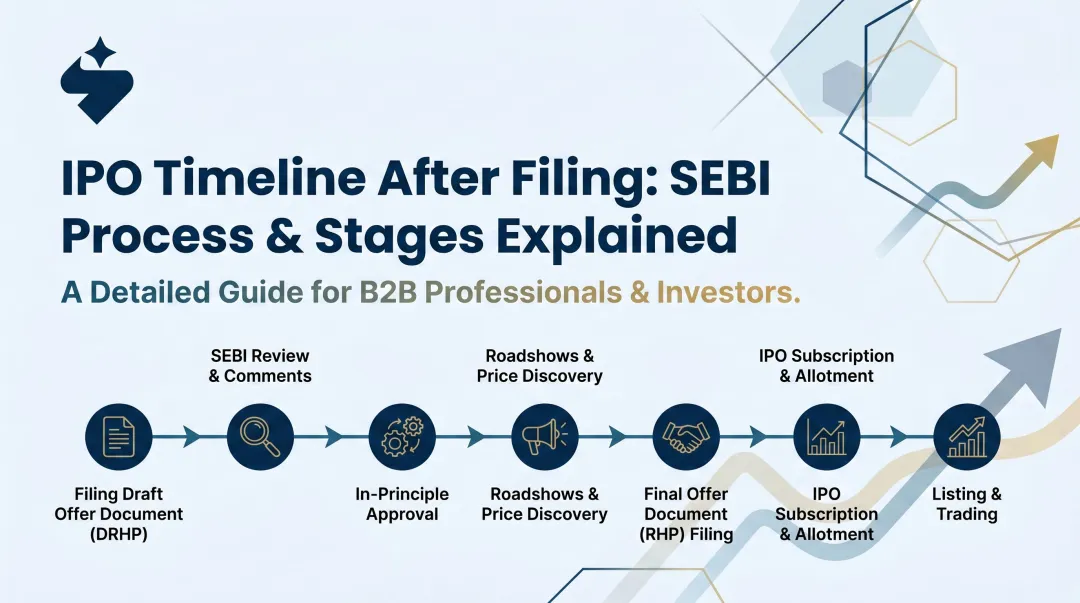
The sequence runs from issuer readiness and lead-manager diligence to filing with SEBI and the stock exchanges. The exact order can vary by issue type and route.
- The lead manager files the draft under Regulation 25(1), with Form A and a draft abridged prospectus.
- Within two working days of filing, a public announcement is made (Regulation 26(2)).
- The draft goes on SEBI, exchange, issuer and lead-manager websites for at least 21 days from the public announcement (Regulation 26(1)).
- The lead manager submits public comments and consequential changes to SEBI.
Query and Response Cycle
- SEBI raises questions or seeks clarifications through the lead manager.
- The issuer, lead manager, counsel and auditors assemble documented responses.
- Revised disclosures and supporting documents go back for further review.

Across those rounds, SEBI typically examines:
- Financial information and capital structure
- Risk factors and objects of the issue
- Related party transactions and litigation
- Promoter and management disclosures
- Material contracts, approvals and the basis for issue price
Why There Is No Universal Timeline
Regulation 25(4) lets SEBI specify observations within 30 days from the latest of several triggers:
- Draft receipt
- A satisfactory reply to further queries
- Information from another regulator
- Stock-exchange in-principle approval
So the clock is not simply 30 days from filing.
Practical duration also depends on draft quality, extra query rounds, public comments and changes in the issuer's circumstances. SEBI's published processing record shows wide case-by-case variation. Sterlite Electric, for example, filed on October 3, 2025, and was still awaiting a lead-manager clarification in November 2026.
What an Observation Letter Means, and Does Not Mean
For the issuer, the letter means SEBI has completed a review stage and communicated observations that must be addressed before the IPO progresses.
It is not:
- SEBI's approval or certification of the company's business.
- Confirmation that the issue price is fair or that the IPO will succeed.
- A recommendation to subscribe, or any assurance about future share price.
SEBI's own wording is plain. Its ICDR FAQs say that filing an offer document should not be construed as the issue being cleared or approved by SEBI. The prescribed disclaimer adds that SEBI does not guarantee the accuracy or adequacy of the document.
How Investors Should Read the Milestone
Read the updated DRHP, the RHP and the final offer documents, and compare what changed. Focus on:
- Risk factors
- Financial information
- Litigation
- Objects of the issue
- Basis for issue price against peers
The practical weight of a letter depends on the number and nature of observations, and on the quality of responses. It also turns on how long document updates take and whether market conditions shift before launch.
What Issuers Must Do After Receiving the Letter
Build an Observation-Response Matrix
Track every comment in one structured sheet with these columns:
- SEBI comment
- Affected DRHP chapter
- Required change
- Supporting evidence
- Responsible adviser
- Lead-manager review
- Closure status
S45 runs a SEBI Query Board for this purpose, with assigned owners, due dates and evidence-based closure. The regulated lead manager remains Narnolia, a Category-I merchant banker.
Update Linked Disclosures
SEBI's comment may touch one paragraph, but the fix rarely stays there. Keep figures and statements consistent across:
- DRHP
- Abridged prospectus
- Financial sections
- Capital structure
- Objects of the issue
- Investor communications
The Post-Observation Sequence
Under Regulation 25(5), the issuer carries out SEBI's specified changes and submits an updated draft highlighting them before filing the offer document with the RoC. Then:

- Finalise responses and incorporate accepted changes.
- Obtain internal and adviser sign-offs.
- Complete stock-exchange requirements.
- File the RHP with the RoC.
- Promptly file the offer document and abridged prospectus with SEBI and exchanges (Regulation 25(7)).
- Submit the compliance statement and Form C due diligence certificate (Regulation 25(9)).
Confirm the current RoC filing order, pricing disclosures and issue-opening requirements for your route against the latest ICDR text.
Deadlines and Later Changes
- Track the letter's issue date, document-readiness milestones, exchange approvals and the issue-opening validity window.
- Do not assume automatic renewal if the window lapses. Check with the lead manager whether an extension or fresh filing applies.
- Under Regulation 25(6) and Schedule XVI, later material changes may need an update or a fresh filing.
- Fresh filing typically applies to a promoter change, replacement of more than half the board, or a change in the main objects clause.
Validity, IPO Timing and Different Filing Routes
Main Board: Standard Route
Under the standard route, the issue must open within 12 months of the observations, as SEBI's April 2026 circular confirms with reference to Regulation 44(1).
That circular also gave one-time relief: observations expiring between April 1 and September 30, 2026 were extended to September 30, 2026, subject to a lead-manager undertaking. It is not a permanent extension.
Confidential Pre-Filing Route
The optional confidential route (Chapter IIA, introduced November 21, 2022) works differently:
- The pre-filed draft is not made public.
- SEBI's 30-day observation window runs from the latest applicable trigger (Regulation 59C(6)).
- A UDRHP-I then goes public for at least 21 days of comments.
- The issue must open within 18 months of the observations (Regulation 59E(4)).
- UDRHP-I must be filed within 16 months of the observations.

SME IPOs
SME issues follow a separate framework:
- Regulation 246(2): SEBI does not issue observations on an SME offer document
- The draft is filed with the SME exchange
- Public comments run at least 21 days from filing
Do not apply Main Board observation-letter terms, validity, or eligibility conditions to an SME issue.
Practical Readiness Checklist and Common Failure Points
Before You Respond
Have these packs ready and cross-checked before you draft replies:
- Restated financial information (SEBI expects three years of audited financials)
- Cap table and promoter records
- Related party transaction schedules
- Litigation and regulatory matters
- Material contracts and approvals
- Debt details
- Objects-of-the-issue support, including general corporate purposes limits (25% of the amount raised under Regulation 7(2))
- Basis for issue price, KPIs and peer-company evidence
Where Drafts Come Back
SEBI's current Master Circular on returned drafts targets unclear language, inconsistencies and inadequately explained risks. Mint reported more than 10 IPO papers returned in the months before July 2024, citing diligence and disclosure concerns.
Recurring causes of rework:
- Inconsistent numbers across chapters
- Vague use-of-proceeds descriptions
- Unsupported business claims
- Incomplete litigation disclosures
- Stale financial information
- Unverified peer data
- Late capital-structure changes
- Weak version control across drafts

Execution Support
Closing these gaps before filing reduces observation cycles and returned drafts.
S45 supports observation response with sector-led review, evidence-linked drafting, live data-room visibility and a SEBI Query Board to assign owners, due dates and close points with evidence. It is execution support, not a substitute for the responsibilities of SEBI, the lead manager, legal counsel or auditors.
Frequently Asked Questions
What is a SEBI observation letter on a DRHP?
It is SEBI's written observations or required changes after reviewing an issuer's draft offer document. It is not an approval or an investment recommendation.
Is a SEBI observation letter an approval?
No. It does not endorse the issuer, valuation, issue price or investment merits. The issuer must still complete all post-observation steps.
What happens after a company receives a SEBI observation letter?
The issuer addresses the observations, updates the documents and coordinates with the lead manager and exchanges. It then files the RHP with the RoC, files with SEBI and exchanges, and completes issue-opening requirements.
How long is a SEBI observation letter valid?
It depends on the route. The standard route allows 12 months to open the issue and the confidential route 18 months. Verify the deadline against the latest ICDR Regulations and the letter itself.
What is the difference between a DRHP and an RHP?
The DRHP is the initial draft submitted for review. The RHP is filed closer to the issue and incorporates the required updates, without complete price and quantity particulars for book-built issues.
Can an IPO launch if the issuer does not address SEBI's observations?
No. Regulation 25(5) requires the specified changes before RoC filing, and Regulation 25(9) requires compliance certification. Resolve open points through the lead manager before launch.